Santiago island, Cape Verde: what it is like
Santiago is the biggest island of Cape Verde, at about 991 km², and more than half of all Cape Verdeans live on it. It is where the Portuguese founded their first settlement in 1462, where the slave trade through the islands was centred, and where the culture most closely tied to West Africa survives: the batuku drumming and singing of women, the accordion-driven funaná, and the island's own strong form of Kriolu.
Physically it is a mix: a dry south around Praia, a mountainous green spine rising to Pico da Antónia, at nearly 1,400 m, deep valleys with terraced fields, and a few sandy bays. It sees few package tourists compared with Sal or Boa Vista, which is exactly its appeal, but it also means fewer beach resorts and more planning.
Cidade Velha, the first capital
About 10 km west of Praia, Cidade Velha, once called Ribeira Grande, was the first European colonial town in the tropics and has been a UNESCO World Heritage Site since 2009. It grew rich as a stop on the Atlantic slave trade, was attacked by pirates and privateers, and declined after the capital moved to Praia in the 18th century.
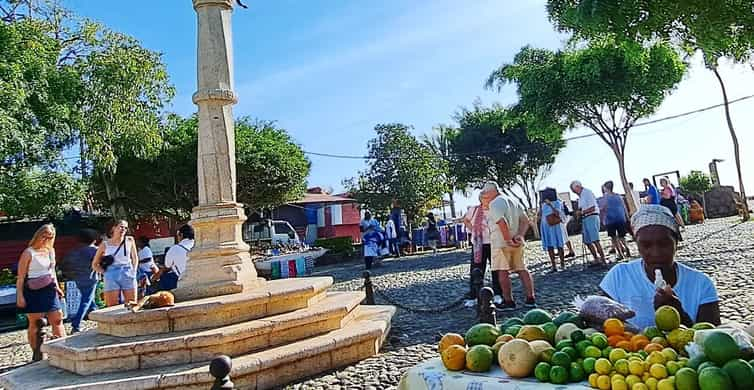
Today it is a quiet fishing village with plenty to see in a morning. The marble pelourinho (pillory) on the seafront square, where enslaved people were punished in public, dates from the early 16th century. Rua Banana is one of the oldest streets, with thatched stone houses. The Nossa Senhora do Rosário church dates from 1495, the ruins of the cathedral were begun in 1556, and above the town the Fortaleza Real de São Filipe, built in 1587-93, gives the best view of the bay. A guide or a guided tour from Praia adds a lot of context.
Serra Malagueta and the interior
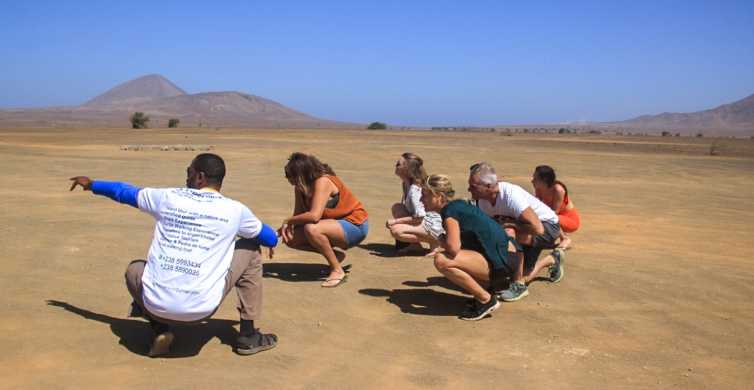
The road north from Praia climbs through the interior to Serra Malagueta, the island's second mountain range and a natural park between Santa Catarina, São Miguel and Tarrafal. From the park's information centre on the main road, marked trails lead along ridges and down green valleys with views to the north coast on clear days. Paths can be steep, there is nowhere to buy food or water once you are on them, and clouds often sit on the peaks, so go early and with enough supplies; a local guide is worth it for longer routes. More ideas in hiking in Cape Verde.
The area around Pico da Antónia and the national botanical garden at São Jorge dos Órgãos, devoted to the islands' native plants, also make good stops on a day of driving through the island's farming villages.
Assomada market
Assomada, the seat of Santa Catarina in the centre of the island, is Santiago's agricultural heart, and its market is the largest and busiest on the island. Farmers from the surrounding hills sell fruit, vegetables, maize, beans, live animals and fish, alongside clothes and household goods. Go in the morning, when it is most active, ask before taking photographs of people, and carry small notes in escudos, as cards are not used. Assomada is an easy stop between Praia and Tarrafal.
Tarrafal: the beach and the former camp
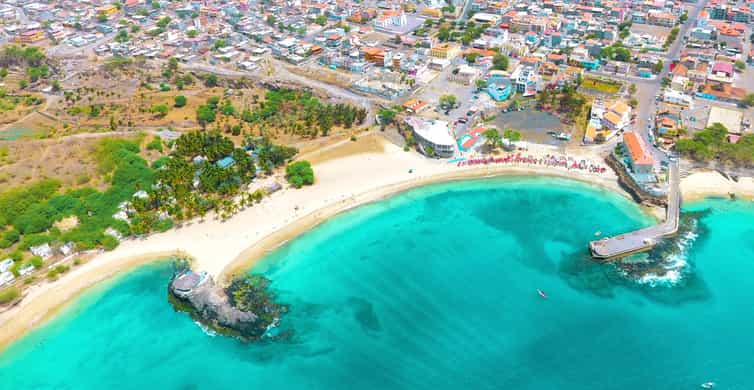
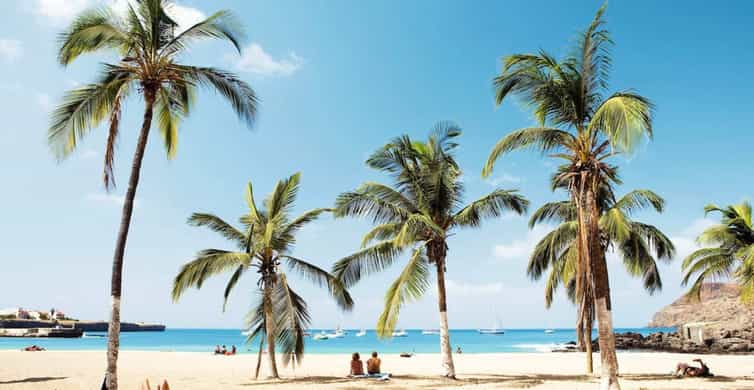
At the northern tip, Tarrafal has the best-known beach on Santiago: a sheltered bay of light sand with palm trees and fishing boats, usually calm enough for swimming and snorkelling. It is the island's main beach destination, with guesthouses and small hotels, and a good place to end a trip around the island.
Just outside the town lies the former Tarrafal concentration camp, opened in 1936 by Portugal's Estado Novo dictatorship. It held Portuguese anti-fascists until 1954 and, after reopening in 1962, anti-colonial fighters from Angola, Guinea-Bissau and Cape Verde until it closed on 1 May 1974. More than 500 people were imprisoned there and dozens died. Since 2000 it has been the Museu da Resistência; the cells and the memorial are a sober, important visit.
Beaches on Santiago
Santiago is not a beach island in the way Sal is. Besides Tarrafal, the best beaches near the capital are the small city beaches of Praia, such as Quebra Canela, and the larger bay of São Francisco east of the city, best reached by car. Many other coves are black volcanic sand or pebbles with strong waves. Currents can be dangerous and beaches are rarely supervised, so swim only where locals do and on calm days. See Cape Verde's beaches for the comparison.
Getting there and around Santiago
International flights from Lisbon and a few other European cities, plus CVsky inter-island flights from Sal, São Vicente, Fogo and other islands, land at Nelson Mandela International Airport, about 3 km from central Praia; from Sal the flight takes about 40 minutes. CV Interilhas ferries link Praia with Maio, Fogo, Brava and Boa Vista. See airports and transfers and island hopping.
Shared minibuses called hiaces or aluguers leave from Praia for Assomada and Tarrafal when full; they are cheap and an experience, but slow, with frequent stops. A hire car or a driver gives far more freedom; roads are paved but winding, and the drive from Praia to Tarrafal through the interior takes a couple of hours.
Allow three to five days: one for Praia, a morning in Cidade Velha, a day crossing the island via Assomada and Serra Malagueta, and a night or two in Tarrafal. Santiago is also the gateway to Fogo and Maio and Brava. Check the weather before planning hikes, as the August to October rains can make tracks slippery, and read safety and entry rules for Praia; dengue has been present on Santiago since late 2023, so use mosquito repellent.