Cape Verde beaches: sand, wind and swell
The best beaches are on the flat, dry eastern islands of Sal, Boa Vista and Maio, with pale sand and dunes. The mountainous islands, Santiago, São Vicente, Santo Antão, Fogo, São Nicolau and Brava, have fewer and smaller beaches, many of them with dark volcanic sand or pebbles.
Two things matter more than the sand. The north-east trade winds blow most days, strongest from roughly December to May, so beaches facing north and east are windy and wavy, while bays on the south and west coasts are more sheltered. And the Atlantic swell can be powerful at any time of year: the UK government warns that tides and currents around the islands are very strong and waves can have a strong undertow. Our weather guide shows what to expect each month.
Beaches on Sal: Santa Maria and Ponta Preta
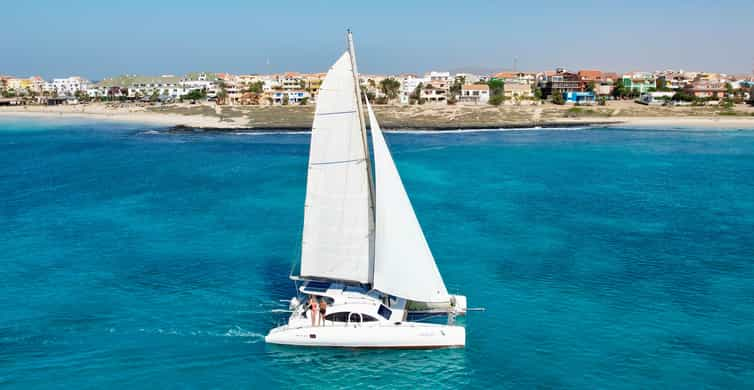
Santa Maria beach runs along the south coast of Sal in front of the town and its resorts. Facing south, it is sheltered from the trade winds by the island, and the sandy bottom shelves gently, so it is the easiest place on the island to swim, especially for children. The pier in the middle is where fishermen land their catch in the morning. The downside is that the beachfront in Santa Maria is busy, with sunbeds, bars and persistent souvenir sellers.
About 4 km west, Ponta Preta is a wide beach backed by dunes and ending in a black rocky point. Its waves draw expert surfers and kitesurfers, and the GKA Kite-Surf World Cup has been held here in several recent seasons. It is more exposed than Santa Maria, so swim only on calm days and away from the point. Beginners in kitesurfing use Kite Beach on the Costa da Fragata, east of town; on the west coast, the bay of Murdeira is usually calmer and good for snorkelling.
Boa Vista beaches: Santa Monica, Chaves and Varandinha
Boa Vista has the longest and emptiest beaches in the country. On the south-west coast, Praia de Santa Monica stretches for well over 15 km of pale sand with almost no buildings. It is also exposed: waves are frequently big and rip currents are common, so on many days it is a beach for walking rather than swimming.
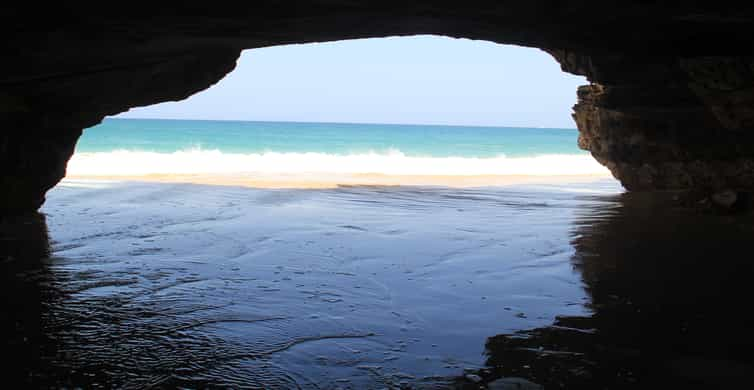
On the west coast, Praia de Chaves runs for about 5 km south-west of Rabil, backed by dunes fed by sand blowing in from the Viana desert; several large all-inclusive resorts stand here. Further south, Varandinha is known for the arches and caves the sea has cut into the rock rather than for swimming. Near the island's main town, the bay of Sal Rei, partly sheltered by the islet offshore, has calmer water and is a base for windsurfing and kitesurfing.
Santiago: Tarrafal and the beaches near Praia
On Santiago, the beach most worth the journey is Tarrafal, a curved bay of light sand and palms at the northern tip of the island, a long drive from the capital. The water is often calm enough for swimming and the rocky edges of the bay are popular for snorkelling. In Praia itself, the small city beaches such as Quebra Canela and Prainha are handy for a swim, and Gamboa beach hosts a big music festival.
São Vicente: Laginha and Baía das Gatas
In Mindelo, Laginha is the city beach, a 10 to 15 minute walk from the centre along the harbour bay. The sand is coarse, with crushed shell, and the seabed drops steeply a few steps from the shore, so it suits confident swimmers and children need close watching. On the north-east coast, Baía das Gatas is a shallow lagoon shielded from the Atlantic waves by a rocky barrier, one of the calmest swims on the island, and the venue of a well-known music festival in August; see our São Vicente and Mindelo guide.
Maio and the mountain islands
Maio has long, almost empty beaches close to its small capital, Vila do Maio, such as Bitche Rotcha and Ponta Preta, plus the high dunes of Morrinho. Few visitors make it there because flights and ferries are limited; see Maio, São Nicolau and Brava. Turtles nest on Maio's beaches in summer, so keep vehicles off the sand.
On Fogo and Santo Antão the beaches are mostly black sand or boulders below steep cliffs, with heavy surf. They are dramatic to look at, but swim only in sheltered spots, on calm days, and ask locally first.
Swimming safety and beach etiquette
Many beaches have no lifeguard. Where there is one, follow the flags: red means do not go in, yellow means you can paddle but not swim, and green means it is safe to swim. Waves and currents change quickly, so walk with care along the water's edge on unsupervised beaches, keep children close and never swim alone or after drinking. On windy days the sand blows hard on east-facing beaches; a sheltered sunbed or a windbreak helps. More safety advice is in our safety, visa and EASE guide.
From about June to December the beaches of Sal, Boa Vista and Maio hold turtle nests: do not drive on the sand, keep lights off the beach at night and respect fenced nests; see turtle watching. Do not take sand or shells home. Taking sand from beaches has been banned since 1997 because extraction for building caused serious erosion, and shells are part of the beach ecosystem. For days away from the sand, browse the Cape Verde excursions.