Shark Bay, Cape Verde: where it is
Shark Bay is the name tour operators use for the Baía da Parda, a shallow bay in the north-east quarter of Sal, near the old salt village of Pedra de Lume. The shore is a low reef of basalt from ancient lava flows, with two small, narrow beaches, and the water stays ankle- to knee-deep for some distance out. Do not confuse it with Kite Beach on the Costa da Fragata, closer to Santa Maria, which some listings also call Shark Bay.
The bay is about 25 minutes by road from Santa Maria, the last part on a dirt track. There is no public transport and there are no facilities, so most people come on a tour; if you take a taxi, agree the waiting time and the return fare before you leave.
Why the lemon sharks are here
Young lemon sharks spend their first years in warm, shallow, sheltered water, away from larger predators, including adults of their own species. Projeto Biodiversidade, the Sal conservation group, studies the bay with tagging, baited underwater cameras and drone counts. Between November 2022 and February 2025 it tagged 83 lemon sharks there, and some were caught again up to 22 months later, evidence that the young stay or keep coming back. On that basis Parda Reef has been listed as an Important Shark and Ray Area, a nursery for the species.
Groups of about 12 to 23 newborn and young sharks are seen all year, newborns making up most of them, especially from June to September. Newborns measure around 50 cm and juveniles 70 cm to 1.2 m; adults reach 2.4 to 3 m. The lemon shark is classed as Vulnerable on the IUCN Red List, and the project works with the Parda community, which earns a living from the visitors, to protect it.
How a visit to Shark Bay works
A guide, usually from the local community, explains how to behave and leads you into the water. Then you stand still and let the sharks come to you: on a good day several glide past within a metre or two, their yellowish-brown backs easy to pick out over the dark rock. Swimming and snorkelling are not practical in water this shallow. On a group island tour the stop is often short, so if the sharks are your main interest, consider a dedicated trip or a taxi.
Visibility depends on the wind and the sea. The north-east trade winds, strongest from roughly December to May, can stir up the water and push waves over the reef, and tours may be cancelled on rough days. The depth also changes with the tide, so no two visits are quite the same. Early morning and mid-afternoon, before and after the main tour groups, tend to mean clearer water and fewer people; check the Sal weather before you go.
Rules: no feeding, no touching
Some guides throw fish scraps to draw the sharks closer. The national good-practice guide for marine excursions, validated by Cape Verde's environment and tourism directorates, says never to use bait: it changes the sharks' natural behaviour, can make them dependent on people and makes risky encounters more likely. It also asks visitors never to touch, hold or chase the animals and not to stand in their path.
Keep your hands out of the water, move slowly, do not splash or follow a shark, and do not use flash. If your guide starts feeding the sharks, say you would rather not, and choose an operator that states it does not use bait. These are wild predators with sharp teeth, and food is what makes them bold.
What to bring and combined tours
Water shoes with a firm sole are essential: the bottom is sharp volcanic rock with sea urchins, and flip-flops are not enough. Local guides rent them on the spot for a few euros, but sizes can run out at busy times, so bring your own if you can. Polarised sunglasses cut the glare and make the sharks far easier to see. Add sun cream, a hat, drinking water and shorts you do not mind getting wet; there is no shade, no toilet and nothing to buy.
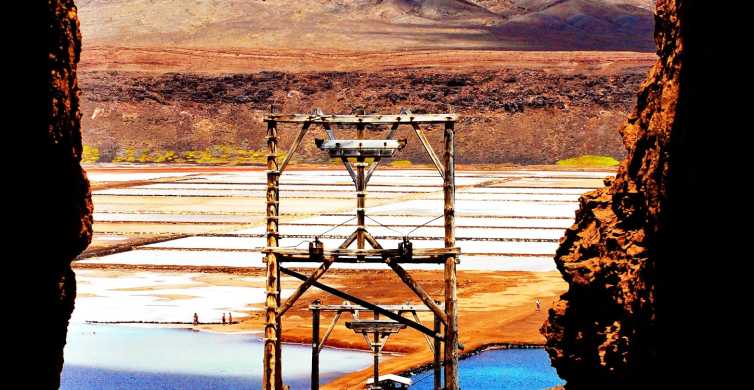
Most visitors see Shark Bay on an island tour of Sal, often combined with the salt crater of Pedra de Lume, where you float in very salty water (the entrance fee is usually extra), the Buracona rock pool and Espargos. Quad and buggy trips often stop here too. Compare the options in Cape Verde excursions and quad and buggy tours, and for wildlife after dark from July to October see turtle watching.