Cape Verde turtles: where and when to see them
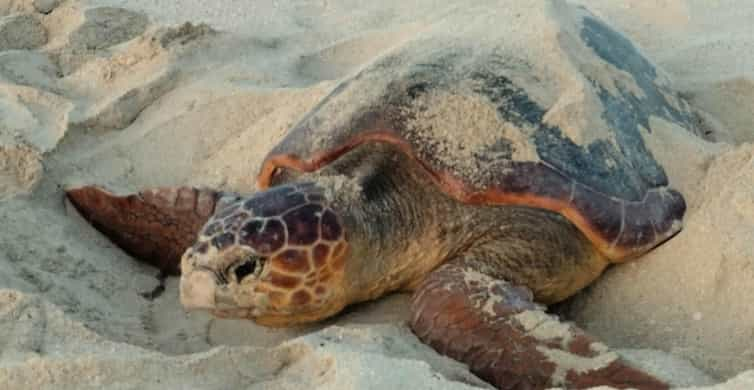
Cape Verde is one of the world's most important nesting sites for the loggerhead turtle, and its population is genetically distinct from other Atlantic loggerheads. Most nests are on the flat, sandy eastern islands. In the 2024 season the conservation groups recorded 36,587 nests on Sal and 22,427 in the Tartarugas Natural Reserve on Boa Vista, while on Maio the Fundação Maio Biodiversidade counted 22,901 nests in 2020. Small numbers of green, hawksbill, leatherback and olive ridley turtles are seen in the surrounding waters.
Females come ashore at night from about June, and most nesting takes place from July to October, which is when turtle-watching tours run; see the weather in July, August, September and October. Each female lays several clutches a season, roughly two weeks apart, with an average of about 80 eggs. The eggs hatch after around 50 to 60 days, so hatchlings emerge from about late August to early December. Outside the season you may still meet turtles when snorkelling or diving.
How a licensed turtle walk works
All sea turtles are protected under Decreto-legislativo 1/2018, and the law requires any organised turtle watching to have prior authorisation from the environmental authority, which sets the time, the place, the maximum number of people and the person in charge. Tours are therefore run by licensed operators, working alongside the groups that patrol the beaches: Projeto Biodiversidade on Sal, BIOS.CV and the Turtle Foundation on Boa Vista, and the Fundação Maio Biodiversidade on Maio. Going alone at night risks disturbing a nesting female, which is an offence.
A typical tour picks you up at your hotel after dark and drives to a nesting beach. The group waits quietly on the sand while the guide searches for fresh tracks. You only move closer once the turtle has started laying, usually in pairs, and you watch from behind her, out of her line of sight. A good-practice guide validated by Cape Verde's environment and tourism directorates recommends no more than ten people per group. Sightings are likely in the season but never guaranteed, and some operators offer a second night if you see nothing.
The rules on the beach
No white light and no flash. Torches, phone screens and camera flashes disturb turtles and can make a female abandon her nest; guides use a dim red light, only on the shell and rear flippers, never on the head. Wear dark clothing, switch off your phone, talk quietly and do not smoke or drink. Walk in single file behind the guide above the high-tide line, stay at least 3 m from the turtle, never touch her and never block her way back to the sea.
The law also bans driving on nesting beaches, except for authorised monitoring teams, as well as disturbing turtles, damaging nests, collecting eggs and buying or eating turtle meat or products made from the shell. Fines for individuals start at 30,000 escudos (about €270) and are a third higher for offences committed at night.
Hatchlings, hatcheries and 'releases'
Hatchlings find the sea by heading for the brightest horizon, so the lights of hotels and bars can lead them inland, where they die. Cape Verdean law limits outdoor lighting within 500 m of nesting beaches, and the conservation groups move nests at risk from flooding, light or poaching to protected hatcheries.
Be wary of tours that promise you can hold a baby turtle or release one at a time that suits the group. Collecting hatchlings without authorisation is illegal, and Projeto Biodiversidade does not offer public releases at all, to protect the babies from crowds. Instead, on Sal you can visit its sea turtle information centre and hatchery on the beach beside the RIU Funana hotel in Santa Maria. Entry is free and donations are welcome; during the hatching season it holds public nest excavations in the late afternoon, when you may see hatchlings. Opening times change with fieldwork, so check its website.
Choosing a turtle tour and what to bring
On Sal, nesting beaches are a short drive from Santa Maria. On Boa Vista the main nesting beaches, such as João Barrosa and Ervatão, are on the remote south-east coast, so expect a longer drive, usually by 4x4. Turtle watching on Maio is small-scale; ask the Fundação Maio Biodiversidade, and see Maio, São Nicolau and Brava. Choose an operator that names its licence or conservation partner, keeps groups small and explains the rules before you reach the beach; many pass part of the price to the beach patrols.
Bring dark, long clothing, as the wind can make the beach feel cool at night, shoes you can walk in on sand, insect repellent and water. Leave the camera in your bag. Ask about minimum ages if you travel with children, since everyone has to stay still and silent for some time. For daytime wildlife, combine the walk with Shark Bay or see all Cape Verde excursions.
Frequently asked questions
When is turtle season in Cape Verde?
Loggerheads nest from about June to October, and turtle-watching tours run mainly from July to October. Hatchlings emerge from about late August to early December.
Can you see turtles nesting on Sal?
Yes. Sal is one of the main nesting islands, with tens of thousands of nests a season, and licensed night walks leave from the Santa Maria area between July and October.
Can you watch turtles in Cape Verde without a guide?
It is not recommended. Organised turtle watching needs authorisation from the environmental authority, and disturbing nesting turtles is an offence, so join a licensed guided walk.
Can tourists release baby turtles in Cape Verde?
Not as a tourist activity. Collecting hatchlings needs authorisation, and Projeto Biodiversidade on Sal holds no public releases; you can instead watch its public nest excavations at the Santa Maria hatchery in the hatching season.
Can you take photos on a turtle walk?
Flash, torches and phone lights are not allowed because they disturb the turtles. Some guides use a dim red light, but most people leave the camera in the bag.