Sal, Cape Verde: what the island is like
Sal is one of the flattest islands in the archipelago: a stony, brown plain with a few volcanic hills, the highest of them Monte Grande at 406 m. There are almost no trees and very little fresh water; drinking water comes from desalination plants, so take short showers. The island was named after its salt, which was mined at Pedra de Lume from the end of the 18th century and shipped from Santa Maria from 1830.
Tourism has turned it into the country's main holiday destination. In 2025 Sal received more than half of all hotel guests in Cape Verde, according to the national statistics institute INE, and most of them stay around Santa Maria in the south. The capital, Espargos, lies in the centre next to the airport; Palmeira, on the west coast, is the island's port and a small fishing village.
Santa Maria and the beaches
Santa Maria is the only real resort town: a grid of low, colourful streets behind a long beach of fine white sand, with the old salt pier in the middle. The bay faces south and is usually the calmest water on the island for swimming. West of town the sand continues past Ponta Preta, the famous wave, to a string of large resort hotels. Read our guide to Santa Maria.
On the east coast, Kite Beach is wide, wild and almost always windy: excellent for watching the kites, less so for a lazy swim, as the surf and currents are strong. Only swim where there is a lifeguard or the hotel says it is safe, and respect red flags. Lifeguards are present only on some beaches.
Things to do in Sal, Cape Verde
Pedra de Lume, north-east of Espargos, is a salt lake inside the crater of an old volcano, where you can float in water far saltier than the sea; the rusty remains of the cableway built in the 1920s to carry salt to the harbour are still there. An entrance fee is charged. Bring flip-flops, as the crystals are sharp, and rinse off at the showers afterwards.
At Buracona, on the north-west coast beyond Palmeira, waves break over black lava into a natural rock pool, and a small cave, the Olho Azul or blue eye, glows bright turquoise when the sun is high, roughly around midday. There is a small entrance fee, and swimming is only safe when the sea is calm. The salt pans of Santa Maria and the lookout over the Terra Boa plain, where mirages often appear, are on the same island tours.
At Shark Bay, in the Baía da Parda on the east coast, juvenile lemon sharks swim in knee-deep water close to the shore; you wade in with a guide and watch, never touching or feeding them. From July to October loggerhead turtles nest on Sal's protected beaches, such as the Costa da Fragata and Serra Negra reserves, and licensed night walks are the only responsible way to see them (turtle watching).
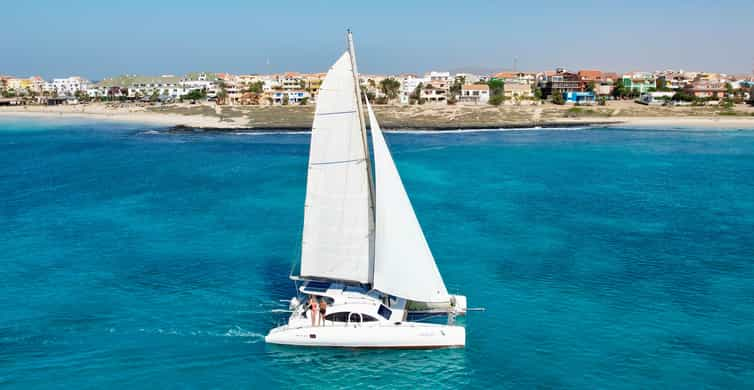
Other popular excursions are quad and buggy tours across the desert interior, catamaran trips, sport fishing and diving or snorkelling on the reefs and wrecks off Santa Maria. Compare them on our tours page.
The wind: kitesurfing and windsurfing
The north-east trade winds blow across Sal for much of the year, strongest roughly from December to May and lightest from August to October. That makes the island one of the main kitesurfing and windsurfing destinations in the Atlantic. Kite Beach and the bay at Santa Maria suit learners and intermediates, while Ponta Preta, a fast right-hand wave just west of town, is for experts and has hosted rounds of the GKA Kite-Surf World Cup. See kitesurf, windsurf and surf.
For everyone else the wind is the main trade-off. It keeps the heat pleasant, but on exposed beaches it blows sand around and can make a winter afternoon feel cooler than the thermometer suggests. Pack a light jacket for evenings from December to March.
All-inclusive or the town?
Most packages to Sal are all-inclusive, and the island has several large resorts, from the complex of three connected RIU hotels, including RIU Funana and RIU Palace Santa Maria, to the Hilton Cabo Verde Sal Resort on the beach in Santa Maria. They are convenient with children and good value in high season, but many lie outside town, so you see little of the island unless you take excursions.
Staying in Santa Maria itself, in apartments or smaller hotels such as the Morabeza, the island's first resort hotel, means walking to restaurants, the pier and the beach. It costs more in meals but gives a better feel for the place. Read where to stay in Cape Verde for the options.
Getting there and around
Amílcar Cabral International Airport, next to Espargos, has direct flights from the UK, much of Europe and Lisbon; from London the flight takes about six hours. Transfers to Santa Maria take about 20 minutes; see airports and transfers, and register on EASE before you fly (visa and the EASE fee).
Shared minibuses called aluguers run between Espargos and Santa Maria during the day, and taxis wait in both towns; agree the fare before you get in. Car hire is possible, but most visitors get around on organised tours. CVsky flies from Sal to Praia, about 40 minutes away, and links the other islands with airports; see ferries and flights between the islands.
How many days on Sal?
A week is the usual package length and enough to see the whole island in one or two days of excursions and spend the rest on the beach. If you want variety, three or four days on Sal combine well with Boa Vista for quieter beaches or with São Vicente and Santo Antão for culture and hiking. Our island comparison helps you choose.
Frequently asked questions
Is Sal worth visiting?
Yes for a beach holiday with guaranteed sun, warm sea and easy transfers. It is flat, dry and windy, so if you want mountains, green valleys or local culture, add Santo Antão, São Vicente or Fogo.
Is Sal too windy?
Sal is windy for much of the year, especially from about December to May. The bay at Santa Maria is relatively sheltered, while Kite Beach on the east coast is exposed.
How far is Sal airport from Santa Maria?
About 16 km, a transfer of roughly 20 minutes by taxi or minibus.
What are the best things to do in Sal?
Floating in the salt crater at Pedra de Lume, the blue eye at Buracona, the lemon sharks at Shark Bay, a morning on Santa Maria pier, kitesurfing lessons and, from July to October, a guided turtle walk.
Can you swim in the sea on Sal?
Yes, the bay at Santa Maria is usually calm enough for swimming. Beaches on the east and north coasts have strong surf and currents, so swim only where it is supervised and respect red flags.