Cape Verde weather at a glance
Cape Verde lies in the Atlantic about 570 km off the coast of Senegal, at the latitude of the southern Sahara, and its climate is closer to the desert than to the tropics. The table gives monthly averages for Santa Maria on Sal, where most holidaymakers stay: daytime highs and night-time lows from the ERA5 climate reanalysis for 2015-2024, and the sea surface temperature from 2022-2025 data. They describe a typical month, not a forecast.
On Sal the average high is 24-25 °C from January to May, 26-27 °C in June and July and 29 °C from August to October, with nights of 20-25 °C. The whole year brings only about 100 mm of rain, and from March to June the monthly average is zero. Each month has its own page with what to expect and what to do: January, February, March, April, May, June, July, August, September, October, November and December.
The two seasons: dry and breezy, then hot and humid
From about November to July the islands are in their long dry season. December to May is the breeziest and mildest stretch, with sunny days that rarely feel hot thanks to the wind, cool evenings and the coolest sea of the year. June and July are calmer and a little warmer, and the air becomes more humid.
From August to October the West African monsoon reaches the islands. These are the hottest and most humid months, with highs of 29 °C on Sal, and the time when most of the year's rain falls. On the flat islands that usually means a few heavy showers or grey days rather than a wet holiday: Sal averages about 30-35 mm in August and September. On the mountainous islands the rain is heavier and more frequent, and the UK Foreign Office warns that the rainy season, from mid-August to mid-October, can bring floods and landslides. In August 2025 Tropical Storm Erin caused deadly flash floods in Mindelo on São Vicente. Hurricanes rarely hit the islands, but tropical storms like Erin are a reason to follow the forecast if you travel at this time.
November is the transition back: still warm at about 28 °C on Sal, with the sea at 26 °C and the wind starting to pick up.
Beach islands and mountain islands
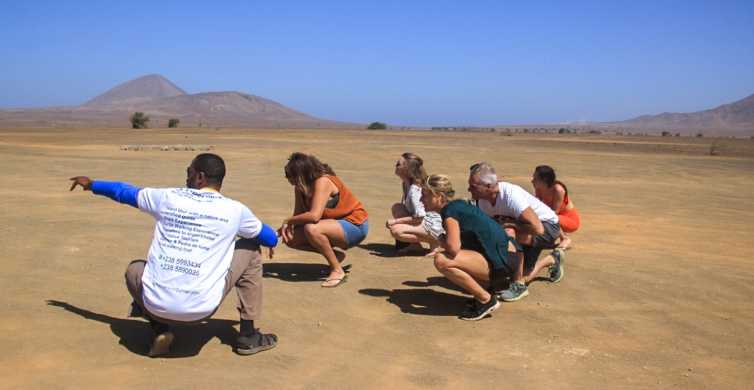
The ten islands split into two climates. Sal, Boa Vista and Maio are low and flat, so clouds pass over them without dropping rain: they are dry, sunny and windy almost every day, with semi-desert landscapes and dunes. São Vicente is hilly but nearly as dry. Our Sal weather guide goes into the details of the most visited island. Its neighbour has its own page: Boa Vista weather.
Santiago, Santo Antão, São Nicolau, Fogo and Brava rise high enough to catch moisture from the trade winds. Their north-eastern slopes are often cloudy and green, like the Paul valley on Santo Antão, while the south-western sides stay dry and brown. Temperatures drop with height, so the crater plain of Chã das Caldeiras on Fogo and the ridges of Santo Antão are fresh by day and cold at night, especially in winter: walkers need a warm layer. Santiago and Praia are warmer and more humid than Sal in summer and get more rain in the wet season.
Wind: the trade winds
The north-east trade winds blow for much of the year and are strongest roughly from December to May. On Sal and Boa Vista that is the reason the heat feels gentle, and also the reason for blowing sand on exposed beaches, rough water on the north and east coasts and some of the best kitesurfing and windsurfing conditions in the Atlantic. Sheltered spots such as the bay of Santa Maria are calmer; see the beaches guide and kitesurfing.
From about June to October the wind is generally lighter, which makes the beach more comfortable for sunbathing but the humid heat more noticeable.
Saharan dust and the bruma seca
Between roughly November and March, most often from December to February, the dry Harmattan wind can carry fine dust from the Sahara over the islands. Locals call the resulting haze bruma seca, dry mist. The sky turns milky, the sun becomes a pale disc and views from the summit of Fogo or the ridges of Santo Antão can disappear for days.
Dust episodes can also disrupt flights. Cape Verde's airport authority has explained that the smaller domestic airfields need minimum visibility to operate, so inter-island flights are the first to be cancelled; the UK Foreign Office notes that sandstorms can affect flights especially on Boa Vista. Leave a spare day before an international flight if you are island hopping, and bring any asthma medication you use.
Sea temperature and swimming
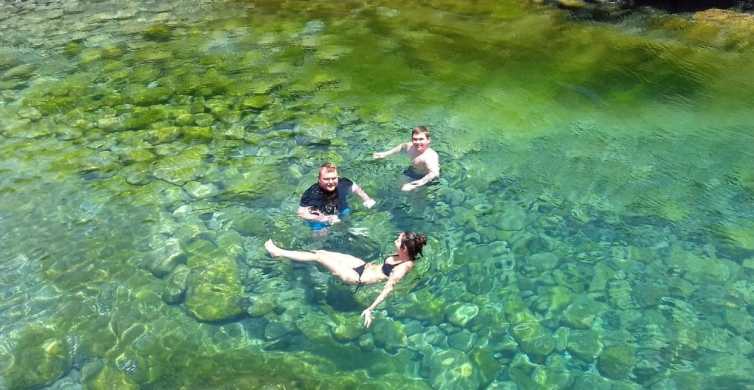
The sea around Sal averages about 22-24 °C from January to June, the coolest point being March, then warms to 26 °C in July and 28 °C in September and October. Most people swim without a wetsuit all year, though a shorty is pleasant for long snorkelling trips in late winter.
Warm water does not always mean calm water. Atlantic swell and strong currents hit many beaches, particularly on the exposed coasts of Boa Vista and Sal, and lifeguards are present only on some. Follow the flags and local advice; our safety guide explains them.
Checking the forecast
The national weather service, the Instituto Nacional de Meteorologia e Geofísica (INMG), issues forecasts and warnings, and the Civil Protection service publishes alerts during the rainy season; both are relayed by local media. General weather apps are fine for temperature, but for boat trips and kitesurfing check a wind and swell forecast too. To weigh the weather against prices, festivals, turtles and whales, see the best time to visit Cape Verde.
Frequently asked questions
What is the weather like in Cape Verde?
Warm, sunny and dry for most of the year, with average highs of 24-29 °C on Sal and nights of 20-25 °C. It is windiest from about December to May, and most of the little rain falls from August to October.
What is the hottest month in Cape Verde?
August, September and October are the hottest months, with average highs of about 29 °C on Sal, the warmest sea (27-28 °C) and the highest humidity.
Does it rain in Cape Verde?
Very little on the beach islands: Sal gets only about 100 mm a year, mostly as showers between August and October. The mountainous islands such as Santiago, Santo Antão and Fogo get more rain in the same season.
Is Cape Verde warm in winter?
Yes. From December to February Sal averages 24-26 °C by day and about 20-22 °C at night, but the strong breeze and a sea of 23-25 °C make it feel fresher than the numbers suggest. For the festive season, see Cape Verde at Christmas and New Year.
What is the sea temperature in Cape Verde?
Around Sal it ranges from about 22 °C in March to 28 °C in September and October, so swimming is possible all year.